
Denton and the Denton County towns around it
Foundation Repair in Denton, TX
Swelling clay to the west and east, sandy ground through the middle: find your band, then get a free inspection.
Soil from the USDA, rock from the USGS, homes from the Census.
A new crack over a door, or a door that won't latch for the first time, is an uneasy thing to find. Before you picture the worst, it helps to know what your house is sitting on. In Denton, that depends on which side of town you live on.
- Free inspection
- No obligation
- Town-by-town soil data
- Referral service, disclosed
- Call (940) 535-7201
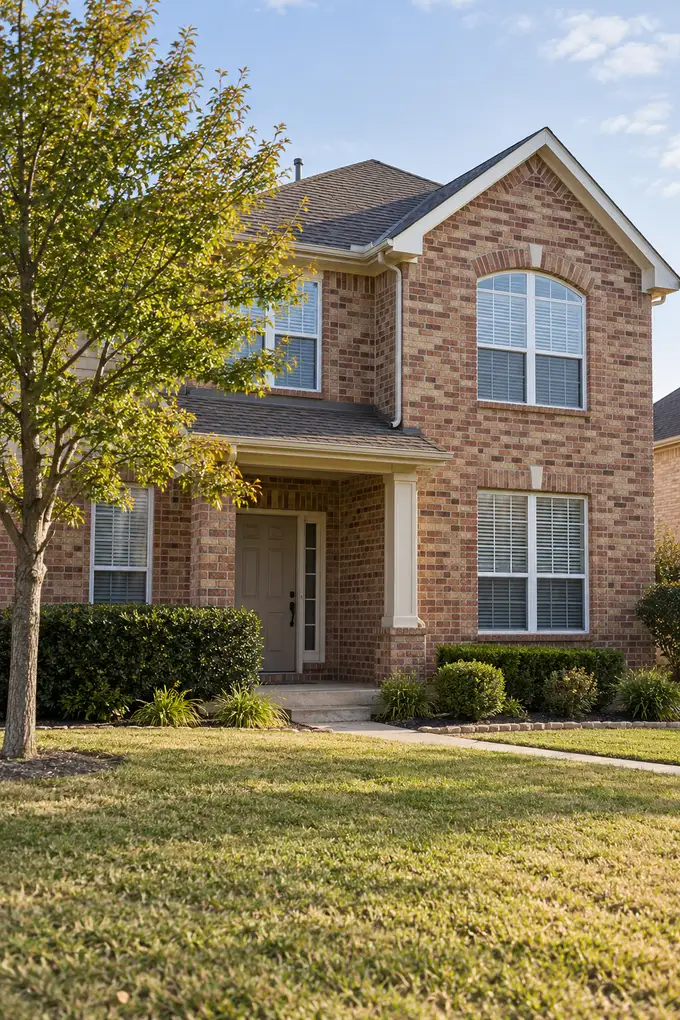
Denton sits right on a line in the ground. We checked the state geologic map at 25 points across the city. Of those, 48% landed on the marl and limestone of the Grand Prairie, which runs west of town. Another 40% landed on the Woodbine, a band of sandstone through the middle of the county. In the USDA soil survey, 44% of the same points fell on soil rated high or very high for shrink and swell.
So two Denton houses a few miles apart can have very different ground under them. A crack on one may mean something quite different from a crack on the other, and the fix can differ too.
A professional who knows Denton's ground can check yours for free.
What have you seen?
Three Bands Under Denton County
Texas Parks and Wildlife says three of the state's ecoregions meet at Ray Roberts Lake State Park: the Grand Prairie to the west, the Eastern Cross Timbers through the middle and the Blackland Prairie to the east. Each one sits on its own kind of rock. The soils that formed on top act very differently under a slab.
We sampled the USGS state geologic map and the USDA soil survey at 25 points in and around each town. The USDA rates how much a soil grows and shrinks between wet and dry: under 3 is low, 3 to 6 moderate, 6 to 9 high and 9 or more very high. Here's how the bands compare, with the share of each town's land points on high or very high soil.
West
West of Denton: clay over marl and limestone
- Rock
- the marl and limestone of the Grand Prairie, with claystone units such as the Denton Clay
- Main soils
- Sanger clay and Ponder loam, which read high to very high from the surface or just below it
High or very high, by town
Middle
Through the middle: sandy soil over the Woodbine
- Rock
- the Woodbine Formation, mostly sandstone with some mudstone
- Main soils
- Birome, Callisburg and Gasil, sandy on top with a low or moderate reading below
High or very high, by town
- Corinth 4.8%
- Lantana 12%
- Flower Mound 13.6%
- Highland Village 16.7%
- Trophy Club 28.6%
East
East toward Frisco: black clay over shale and chalk
- Rock
- the black shale of the Eagle Ford and the Austin Chalk
- Main soils
- Houston Black, Ferris and Branyon, very high clays at least 3 feet thick
High or very high, by town
- Frisco 84%
- Little Elm 85.7%
- The Colony 94.7%
Denton sits on the edge of the west and middle bands.
Lewisville is the odd one out. Most of our land points there, 12 of 20, landed on river deposits rather than any of the three bands. The soil on them still reads like the clay bands: 16 of its 20 land points, or 80%, came up high or very high.
Denton itself sits on the edge of the first two bands. On our grid, the Woodbine lies under the middle of town and spreads to the south and east. The marl and the Denton Clay lie to the west and north.
The soil is just as mixed. Denton's two most common soils, Callisburg and Justin, are sandy loams over a subsoil that reads moderate. They cover only 8 of our 25 points, though. Another 11 landed on soils that read high or very high.
Sanger clay, the worst of them, turned up at 3 points. It reads 8.4 at the surface and 9.1 from about 7 inches down to about 3 feet, with no rock in the 80 inches the survey describes. Eleven of 25 is close to half. So in Denton, it pays to find out which soil your own lot is on before you read too much into a crack. Our guide to Denton County soil and rock goes town by town and shows how to look yours up.
How a Referral Works
1. Tell us what changed. Call (940) 535-7201 or use the short form. A line or two about what you've noticed, and about when it started, is all it takes.
2. Someone nearby calls you back. Your request goes to a foundation repair company that covers your corner of Denton County. They'll book a time to look at the house, free.
3. The decision stays with you. They'll share what they found. Whether any work happens, and who does it, is your call, and getting other quotes is fine.
We're a referral service. We don't send crews or do repairs. The professionals we work with may pay us for the requests we pass on, as our referral marketing disclosure explains.
Our Foundation Repair Services
- Slab foundation repair for concrete slabs, whether the ground below is clay or sand
- Pier and beam repair for raised floors over a crawl space, more common in older houses
- House leveling when floors slope or doors stick across the house
- Foundation inspection to measure the floors before anyone talks about a repair
- Foundation crack repair to sort a crack in the finish from one that points to movement
Signs Your Foundation Is Moving
The first signs are usually small and easy to live with for a while. The Texas Section of the American Society of Civil Engineers lists the ones engineers look for, including these:
- Cracks in brick or siding outside, or in drywall and ceilings inside
- Door and window frames pushed out of square, so doors stick or won't latch
- Walls pulling away from the ceiling or the floor
- Floor tiles that crack or lift
- Joints that used to be tight opening up
The same guidelines say that seeing some of these doesn't by itself mean the foundation is failing. What tells you more is whether a crack is still moving. A pencil tick at each end of the crack, with the date written beside it, will show you in a few weeks. The edges tell you something as well. HUD's rehab inspection guide reads a clean crack as recent movement, and a dirty or filled one as a crack that may be done moving.
The season can be a clue too. NOAA's Denton 2 SE station averages 4.86 inches of rain in May and 4.64 inches in October, with average highs of 95.9°F in July and 95.8°F in August. Clay shrinks as it dries and swells when it's wet again. So on the clay bands west and east of Denton, a crack that widens through a dry August and narrows after October's rain often points to the soil.
On the sandy middle band, the soil moves less. If a crack there keeps growing, look hard at water as well: a leak, a gutter that empties against the wall, or a yard that slopes toward the house. The engineers' guidelines call for ground that falls at least 6 inches in the first 10 feet away from the house.
When two or three of these show up together, it's worth getting the floor levels checked.
Slab Leak or Foundation?
Not every problem under a floor is the foundation. Water and sewer lines run under many slabs, and a leak in one is a plumbing job. In Texas, plumbing work needs a state license, unless you're doing it yourself in your own home.
In Denton, a leak between the street and your meter box is the city's to fix: call (940) 349-7000. Between the meter box and the house, it's yours, and the city suggests calling a certified plumber soon.
The two trades meet again after a repair. A pier repair guideline from the Foundation Performance Association, a Houston-based group of engineers and repair firms, has the contractor run a leak test on the water and sewer lines under the slab once the work is done. Our slab leak guide covers who to call first.
What Denton Homes Are Built On
The Census counts 57,824 homes in Denton, and the median one was built in 1995. Of the 33 towns we studied, only four have an older median. Building has been steady for decades: 15.9% of homes date from the 1980s, 12.7% from the 1990s, 21.8% from the 2000s and 18.4% from the 2010s. In all, 55.7% went up in 1990 or later.
At the other end, 8.0% of Denton's homes were built before 1960. Among the 33 towns we studied, only Pilot Point has a larger share, at 19.8%.
A build year can't tell you what's under the floor. Across Texas, though, raised pier and beam floors with a crawl space were more common before about 1960. Later houses lean toward slabs. In many of the newer ones, steel cables run through the concrete and are stretched tight once it sets, which is called post-tensioning.
The Post-Tensioning Institute dates its design method for house slabs on expansive soil to 1980. Your own house may break the pattern, so a foundation inspection is the way to know.
- 1995Median year Denton homes were built
- 8.0%Built before 1960
- 55.7%Built in 1990 or later
Source: US Census Bureau, American Community Survey 5-year estimates, 2023.
Who to Call First
A repair company or a structural engineer: either is a sound first call. Repair companies tend to look at a house without charge, and you'll hear quickly if work is needed. A structural engineer you hire yourself bills for the visit and has nothing to sell you afterward, which is handy when a big quote needs a second pair of eyes.
In Denton, you'll meet an engineer either way. The city wants a repair letter and plan sealed by a Texas registered engineer before the work, and a final sealed report before the last inspection. We work on the repair company side, since that's where the requests we pass on go. The engineer or repair company guide weighs both starting points.
What Foundation Repair Costs Around Denton
Wanting a rough figure before anyone comes out is fair. Two repair companies publish averages from their own jobs, and they land close together. One large Texas company puts its Dallas-area foundation repair average at about $11,117, based on work booked in 2026. A company with a Lewisville office says its repairs over the past 12 months averaged just over $11,000.
Neither is a price for your house. The Lewisville figure includes a third-party engineer's inspection, the city permit and a plumbing test, so it's fair to ask whether a quote covers the same things. The permit is a small part of it: Frisco and The Colony each list $75 for a foundation repair permit. That same Lewisville company says 1 in 3 of the clients it evaluates don't need any repair.
A big part of any quote is how many piers it calls for, and that depends on what a floor survey finds. Quotes written after a survey are the ones you can fairly line up side by side. More on what foundation repair costs.
Permits in Denton
The City of Denton says it plainly: all foundation repairs require a permit. Here's what the city asks for:
- An engineer's letter and plan. Both are signed and sealed by a Texas registered engineer.
- One of two ways to apply. Plans go in online through eTRAKiT, or on paper at the Development Services Center, 401 N Elm Street.
- A sealed report at the end. The engineer's final sealed report goes into eTRAKiT before the final inspection.
That works in your favor. An engineer looks at the plan before work starts and signs off on the result after. Texas doesn't license foundation repair companies, and a 2013 bill to create a license didn't pass, so the permit and the engineer's seal are the checks Denton builds into the job. Each town sets its own rules, and our permits guide covers them.
Towns We Serve
We serve Denton and the towns around it, sorted here by band:
- West, on clay and marl: Krum, Sanger and Roanoke
- Middle, on the Woodbine: Corinth, Lantana, Highland Village, Flower Mound and Trophy Club
- East, toward the Blackland clay: Little Elm, Lewisville, The Colony and Frisco
Across those 12 towns, the share of land points on very high clay runs from none in four of the five middle towns to 84% in Frisco and 84.2% in The Colony. See all service areas.
Common Questions
Which band is my Denton house on?
It depends on the side of town. On the state geologic map, the Woodbine sand lies under the center, south and east of Denton, with the Grand Prairie marl and the Denton Clay to the west and north. The highway isn't the dividing line: on the west side of Denton, the map shows Grand Prairie rock on both sides of I-35.
To check one lot, type its address into the USDA's free Web Soil Survey. Our soil and rock guide shows which names to look for.
Is the Denton Clay named after the city?
No. The US Geological Survey's record of rock names says the Denton Clay takes its name from Denton Creek. It's one of the Grand Prairie's clay layers, and in our sample of the state map, the unit that holds it lies west and north of town.
Can I water my foundation during Denton's summer watering hours?
Yes. From June 1 to September 30, Denton bans watering outside 6 p.m. to 10 a.m., but hand-watering and soaker hoses for foundations are exempt. A drought stage can add limits, so check the city's current notice before you start. Our watering guide covers how to go about it.
Do foundation repair companies need a Texas license?
No. Texas has no state license for them, and a 2013 bill to create one failed in the House. In Denton, the protection comes from the permit: an engineer seals the plan before the work and the final report after it.
My house was built in the 2000s. Can it already be moving?
It can, especially on the clay bands. A low spot isn't always movement, though. The Texas engineers' guidelines point out that new foundations generally aren't built dead level. One set of floor readings is a snapshot. A second set, taken in another season, is what shows a change.
Will a free inspection lock me into a repair?
No. Nothing is owed for the visit or after it. If the floors measure close to level, the honest advice may be to watch and wait.
Get a Free Foundation Inspection in Denton
Tell us what you've noticed and roughly where you live. A foundation repair company that works in Denton will get your note, check the floors and explain the readings in plain terms. The visit is free, with no obligation.
What have you seen?